
 Contact us
Izolyator high-voltage bushing has been successfully tested under conditions of internal electric arcing
On January 29, 2026, the Izolyator high-voltage bushing, commissioned by the Turkish Electricity Transmission Corporation, was successfully tested under conditions of internal electric arcing.

Turkish Electricity Transmission Corporation (Türkiye Elektrik İletim A.Ş. — TEİAŞ) is a state power grid company engaged in electricity transmission with construction of new power lines and development of the country’s infrastructure using advanced technologies. The head office of TEIAŞ is located in Ankara.
The achieved test goal is to ensure that the inlet structure is able to withstand the thermal and mechanical effects of internal arcing destruction without shrapnel damage to the inlet or fire spread, as well as ensuring the safety of personnel and equipment.
The 420 kV RIP bushing was tested at the High-Voltage Equipment Testing Center of Rosseti R&D Center, which is the core competence center of the Rosseti Group in the field of scientific, design and engineering solutions for the design and construction of innovative power industry facilities.
The tests were conducted under the supervision of the Deputy General Director, heads of departments and technical specialists of TEİAŞ.
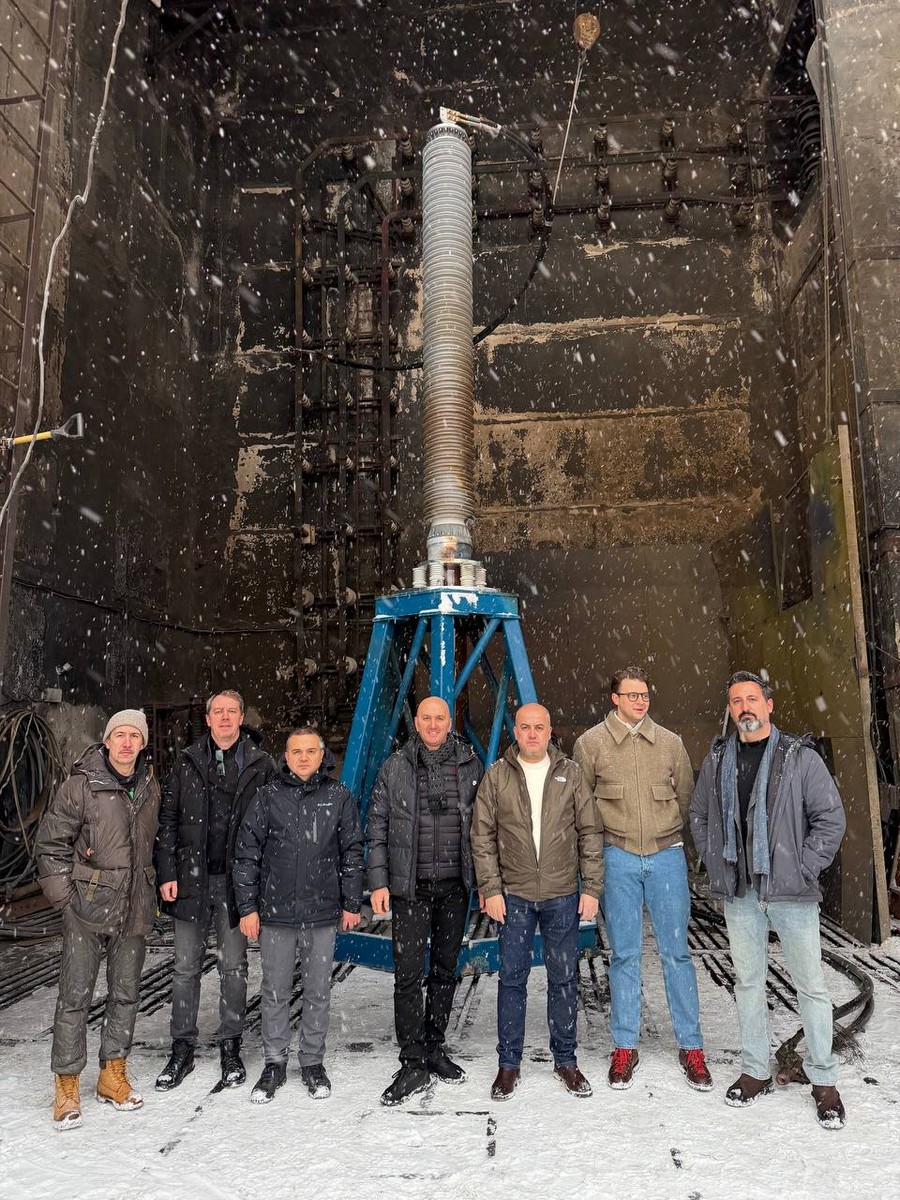 420 kV Izolyator bushing tests for the Turkish Electricity Transmission Corporation at the High-Voltage Equipment Testing Center of Rosseti R&D Center
The tests were carried out in accordance with the special requirements of the customer, while the short-circuit current was 63 kA, the shock current was 157.5 kA.
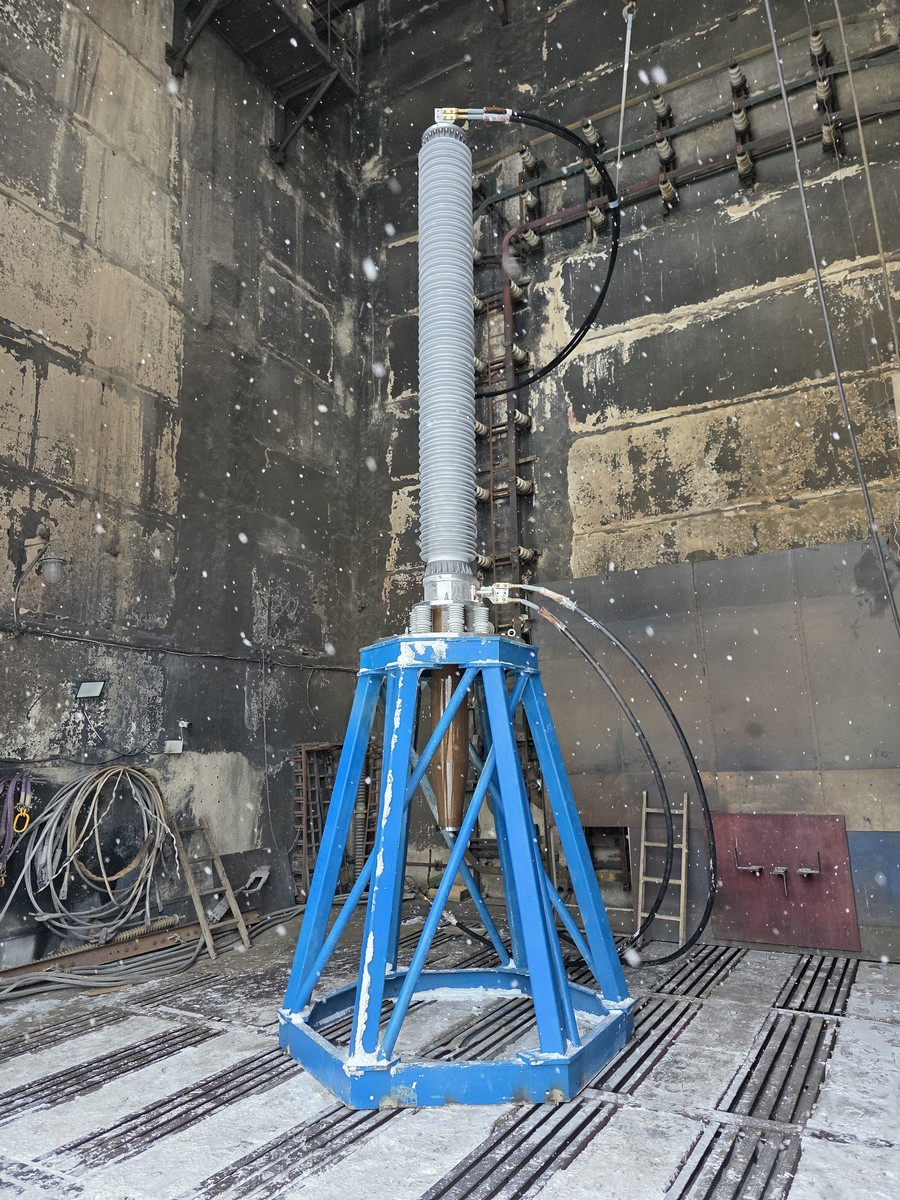 The bushing is ready for testing
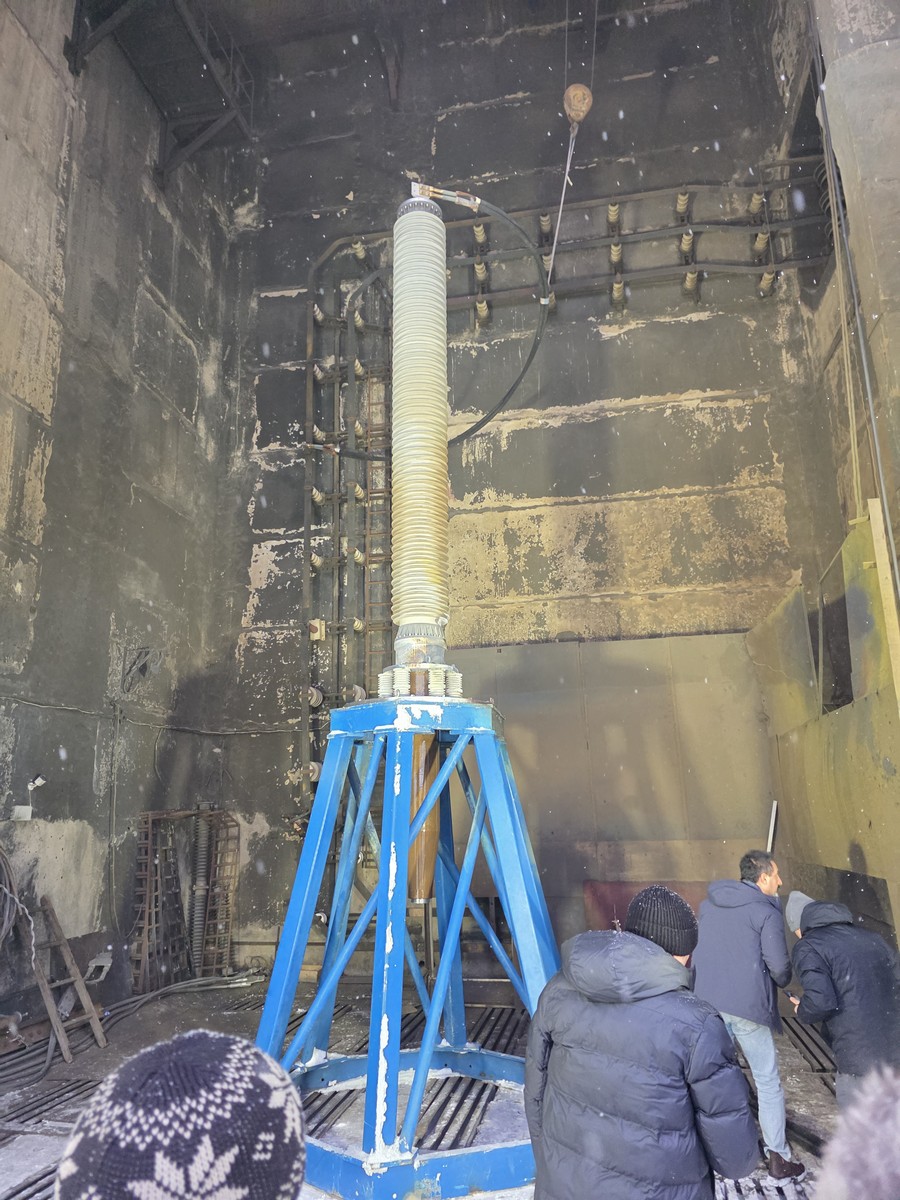 The tests were successfully completed
These tests were carried out at the special request of TEİAŞ in connection with the revision of the requirements for power equipment due to the high seismic activity in Turkey in recent years.
Video recording of the tests
Earlier, by order of TEİAŞ, the 420 and 172 kV Izolyator bushings with the maximum possible seismic impact were successfully tested at the Central Power Research Institute in India.